
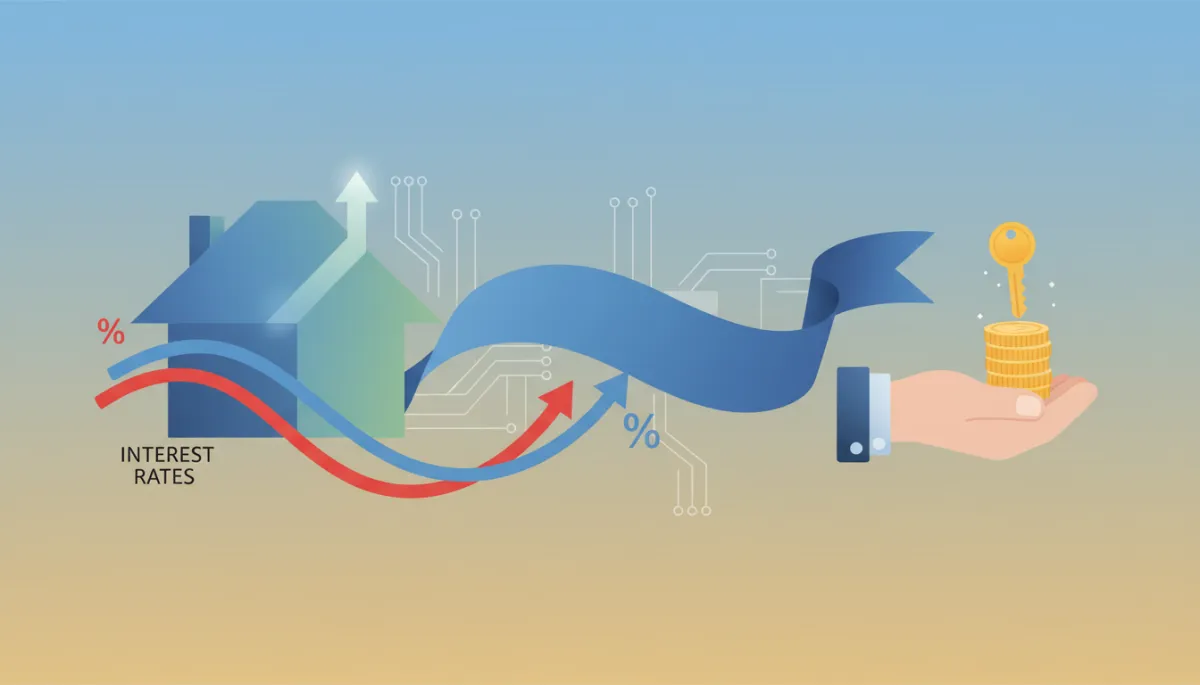
Smart Refinancing: Low Rates & High Benefits
Personal Finance, Refinance, Mortgage Refinancing, Home Loans
When It Still Makes Sense to Refinance Even If Your Rate Is Already Low
If you locked in a low mortgage rate during the recent years of ultra-cheap money, you might assume refinancing is off the table forever. After all, why touch a home loan at 2–3% when current interest rates are much higher? Yet for many homeowners, refinancing can still be a smart move—even when your existing rate is significantly below current market rates. The key is understanding when it makes sense to refinance and what you’re trying to achieve financially.
Why Interest Rate Isn’t the Only Factor in Refinancing
Most people think of refinance decisions in simple terms: “If I can’t get a lower interest rate, I shouldn’t refinance.” That rule of thumb made sense when rates were more stable, but today’s environment is different. Many individuals hold historically low mortgage rates that may never return. Yet life still changes, and so do financial goals.
Modern mortgage refinancing is less about chasing the lowest possible rate and more about reshaping your overall financial picture. Even with a home loan well below current market rates, you might gain flexibility, lower risk, or free up cash that improves your long-term net worth. The question becomes: What are you optimizing for—monthly payment, debt payoff speed, cash flow, or peace of mind?
When It Makes Sense to Refinance with a Higher Rate
1. You Need to Consolidate High-Interest Debt
If you’re carrying large balances on credit cards or personal loans at 15–25% interest, those debts can be far more damaging than a slightly higher mortgage rate. Even if your current home loan is at 3% and a new one would be 6–7%, rolling high-interest balances into a cash-out refinance can dramatically reduce your total interest costs and simplify your finances.
You replace multiple high-interest debts with a single, structured home loan payment.
Even with a higher mortgage rate, your total monthly outflow may drop significantly.
You gain a clear payoff schedule instead of revolving debt that lingers for years.
💡 Pro Tip: When using mortgage refinancing to consolidate debt, commit to changing the habits that created the high-interest balances in the first place. Otherwise, you risk refilling those credit cards and ending up in a worse position.
2. You Want to Shorten Your Loan Term and Build Equity Faster
Another scenario where refinancing can make sense—despite higher current interest rates—is when you shorten your term. Moving from a 30-year to a 15- or 20-year mortgage can significantly reduce the total interest you pay over the life of the loan, even if the new rate is slightly higher.
For example, imagine you have 27 years left on a 30-year home loan at 3%. Refinancing into a 15-year mortgage at 5.5% might increase your monthly payment, but you could shave more than a decade off your payoff timeline. If your income has grown and you value being debt-free sooner, that trade-off can be worth it. The decision is less about rate comparison and more about your personal priorities and capacity to handle a higher payment.
3. You Need to Remove a Co-Borrower or Ex-Spouse
Life events—divorce, separation, or buying out a partner—often require changing who is legally responsible for a mortgage. In many cases, the only clean way to remove someone from a home loan is to refinance into a new one in a single person’s name.
Even if the existing interest rate is significantly below current market rates, the legal clarity and emotional closure can justify refinancing. For individuals rebuilding their financial lives after a major transition, having a mortgage solely in their name—and releasing an ex or relative from liability—can be invaluable.
4. You Want to Switch from an Adjustable-Rate to a Fixed-Rate Mortgage
If you currently have an adjustable-rate mortgage (ARM), your initial teaser rate may have been extremely low—perhaps even lower than your current fixed-rate offer. But as interest rates rise, your payments can increase dramatically at each adjustment period, creating uncertainty and stress.
Refinancing into a fixed-rate home loan, even at a higher rate than you’re paying today, can protect you from future spikes. For many individuals, the ability to budget confidently and avoid payment shock is worth accepting a higher but stable interest rate now. This is especially true if you plan to stay in your home for many years.

-toned photo of a homeowner using a laptop and calculator at a kitchen table, reviewing home...
Careful comparisons of total costs help reveal when refinancing truly pays off.
5. You Need to Tap Equity for Major Life Goals
Home values have risen significantly in many areas, leaving homeowners with substantial equity. A cash-out refinance lets you convert some of that equity into cash for major expenses—such as funding a child’s education, making essential home improvements, or investing in a business.
While it can be emotionally difficult to give up a very low rate, the question is: What will you do with the money? Using a cash-out refinance to remodel a home, add a rental unit, or pay for a degree that increases your earning potential may provide returns that outweigh the cost of a higher mortgage rate. The key is to treat your equity as a strategic tool, not a piggy bank for lifestyle upgrades that don’t build long-term value.
How to Evaluate Whether Refinancing Is Worth It for You
Look Beyond the Rate: Compare Total Cost and Total Benefit
When deciding whether to refinance, especially when your current interest rate is significantly below market, focus on the big picture:
Closing costs: What will you pay in fees, points, and other charges to obtain the new home loan?
Monthly payment impact: Will your payment go up or down, and can your budget handle the change?
Loan term: Are you extending your payoff date or shortening it, and how does that affect total interest?
Alternative options: Could a home equity loan or line of credit meet your needs without replacing your primary mortgage?
📌 Key Takeaway: A higher rate doesn’t automatically mean a bad refinance. What matters is whether the overall move improves your financial situation over the time you expect to stay in the home.
Consider How Long You’ll Stay in the Home
Time horizon is critical. If you plan to move or sell within a few years, the benefits of mortgage refinancing may not have time to outweigh the costs. On the other hand, if this is your “forever home,” even modest improvements in cash flow, debt structure, or peace of mind can compound over decades.
Ask yourself: Will this refinance still look like a smart decision five or ten years from now? Framing the choice in terms of your long-term plans helps you avoid over-focusing on today’s rate comparisons alone.
Factor In Your Personal Risk Tolerance
Every individual has a different comfort level with debt, variable payments, and financial uncertainty. Some people sleep better knowing they have the absolute lowest possible rate, even if it means juggling other high-interest debts. Others prefer a slightly higher rate in exchange for predictable payments, simplified finances, or faster payoff.
There is no one-size-fits-all answer. The “right” refinance is the one that aligns with your goals, your lifestyle, and your tolerance for risk—not just the one with the smallest percentage number on paper.
Putting It All Together: Should You Refinance Your Low-Rate Mortgage?
If your existing mortgage rate is significantly below current market rates, you’re in an enviable position—but that doesn’t automatically mean “never refinance.” Instead, think of your low-rate loan as a valuable asset. You should only give it up if the overall benefits of a new home loan clearly outweigh the costs.
Refinancing can make sense when it helps you eliminate crushing high-interest debt and regain control of your finances.
It can be wise when you shorten your term, build equity faster, and move closer to a debt-free future.
It may be necessary to cleanly separate finances after a divorce, remove a co-borrower, or shift from an ARM to a stable fixed-rate mortgage.
It can be strategic if you’re tapping equity for investments or improvements that genuinely strengthen your long-term financial position.
Before making a decision, run the numbers with a trusted lender or financial professional. Compare scenarios, including keeping your current loan, using a home equity product, and pursuing a full refinance. As an individual homeowner, your circumstances are unique—your income, goals, family situation, and risk tolerance all matter as much as the headline interest rate.
Ultimately, mortgage refinancing is a tool. Used thoughtfully, it can help you simplify your finances, protect your budget, and move closer to the life you want, even in a world where your original interest rate may never be seen again. The key is to ask not just, “Is the new rate lower?” but, “Does this refinance move me in the right direction financially—today and in the years ahead?”


