
Should You Buy Down Your Mortgage Rate?
Mortgages, Home Buying, Interest Rates
Should You Buy Your Mortgage Rate Down by 0.25%? Do the Math Before You Decide
Paying extra upfront to lower your mortgage rate can save you thousands over time—but only if the numbers work for your situation. A thoughtful, math‑driven approach is essential before you spend money to “buy the rate down.”
How a 0.25% Rate Buydown Can Add Up to Big Savings
In today’s market, 30‑year fixed mortgage rates are hovering in the mid‑6% range—around 6.5% according to recent national averages from Freddie Mac and other trackers. On a large loan, even a modest 0.25% drop in your rate can translate into meaningful savings over time.
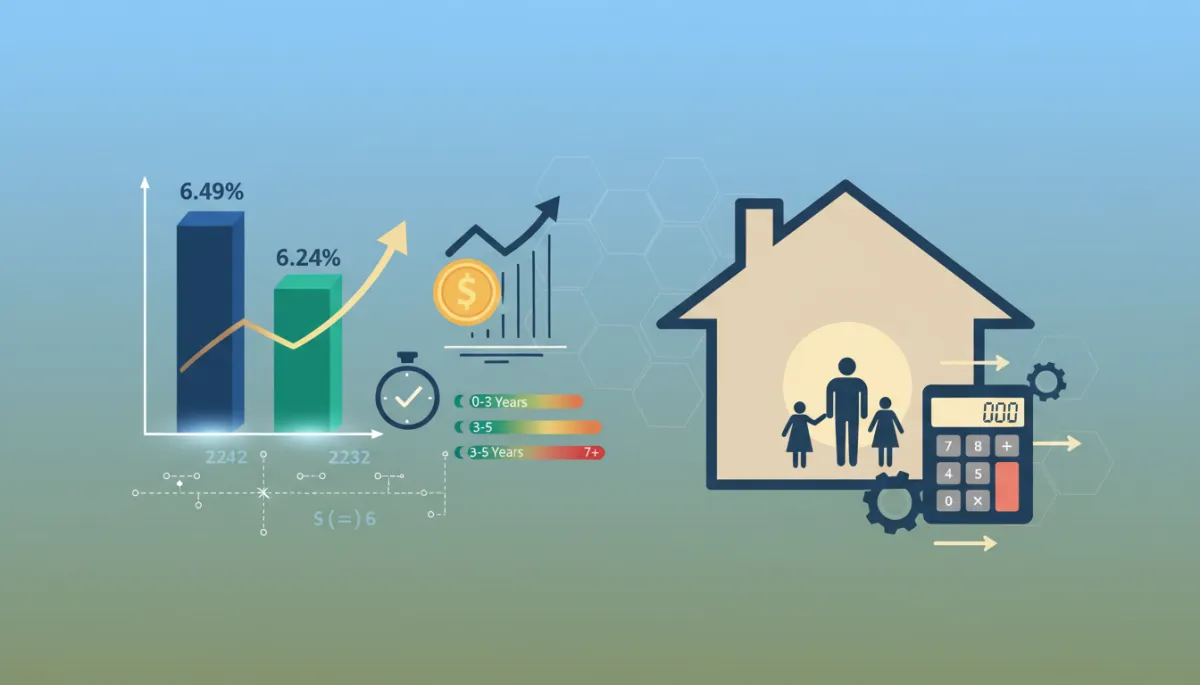
Consider this real‑world style example: a $315,000 loan at 6.49%. If you pay 1.117 points—that’s about $3,519 upfront—you might be able to reduce the rate by roughly 0.25%, depending on the lender’s pricing. That lower rate cuts your monthly payment by around $49 per month.
Over the full 30‑year term, that $49 a month adds up to about $17,640 in total payment savings. On paper, paying $3,519 now to save $17,640 over time looks like a fantastic deal. But there’s a catch: very few people actually keep the same 30‑year mortgage for 30 years.
The Key Concept: Breakeven Point on Your Buydown
To know whether buying your rate down makes sense, you need to calculate your breakeven point—the moment when your monthly savings equal the upfront cost you paid for the lower rate. After that point, the savings are “real money” in your pocket. Before that point, you’re just slowly recouping your investment.
Start with the upfront cost of the buydown (your points), for example $3,519.
Divide by your monthly savings from the lower payment, here about $49 per month.
Breakeven months = $3,519 ÷ $49 ≈ 71.8 months, or just under 6 years. That means you’d need to keep this mortgage for almost six years before the buydown truly pays off. Only after that point do you begin to see net savings beyond your initial investment.
📌 Key Takeaway: The lower rate is only a good deal if you expect to keep the loan long enough to cross the breakeven line.
Rules of Thumb: 3 Years, 5 Years, and 71+ Months
Because life is unpredictable, it helps to use simple guidelines when evaluating a buydown:
If you earn back your cost in 3 years or less, the buydown is usually a safe bet. You’re likely to benefit even if you move or refinance a bit earlier than planned.
If you break even in 3–5 years, it can still be worth considering, especially if you feel confident you’ll stay put for a while.
If it takes 71+ months (nearly 6 years) to break even, as in our example, the decision becomes more questionable. You’re tying up cash today for savings you may never fully realize if you move or refinance sooner.

A simple breakeven calculation can quickly reveal if points are worthwhile.
How Long Do Homeowners Really Keep a 30‑Year Mortgage?
The “30‑year” label can be misleading. While many borrowers choose 30‑year fixed loans, most don’t keep them for three decades. Recent data from SoFi, Redfin, and other sources show that U.S. homeowners typically stay in their homes for about 9 to 12 years before selling or refinancing. One late‑2025 report put sellers’ average ownership at roughly 8.6 years, while several studies place overall homeowner tenure near 12 years.
There is an important exception: homeowners who locked in extremely low rates during the COVID‑era rate trough. Many of them are hesitant to give up those ultra‑cheap mortgages, which can lengthen average tenure statistics. For buyers taking loans in today’s mid‑6% environment, however, future refinancing opportunities are very possible if rates fall again—or life changes push a move sooner than expected.
When you compare a 6‑year breakeven to an 8–12 year typical stay, a buydown might look acceptable on paper. But remember, averages hide a lot of variation. Job changes, family needs, or market shifts can easily pull your timeline forward, leaving you short of that breakeven mark.
Smart Math for Your Situation: Questions to Ask
How long do I realistically expect to keep this mortgage? Be honest about career plans, family changes, and lifestyle goals.
What is my exact breakeven month count? Divide total points paid by monthly savings to get a clear number.
Could this cash be better used elsewhere? For some borrowers, extra funds might make a bigger impact as an emergency cushion, debt payoff, or home improvements that raise value.
Am I focused on the “best rate” or the “best deal”? A slightly higher rate with lower upfront costs may be smarter if you’re unlikely to keep the loan long term.
💡 Pro Tip: Ask your lender to show you a side‑by‑side comparison: total costs and breakeven for your current rate versus each buydown option.
Work With Professionals Who Prioritize Your Strategy, Not Just the Rate
Buying a rate down can absolutely be a smart move. A 0.25% reduction, especially on a larger loan, has the potential to save you thousands of dollars in interest. But the best rate is not always the best deal for your life and your plans. What matters is how that rate fits into your broader home and financial strategy.
That’s why it’s crucial to work with mortgage and financial professionals who are willing to walk through the math with you, challenge your assumptions, and help you weigh trade‑offs—not just sell you the lowest advertised rate. A balanced, numbers‑driven conversation can clarify whether paying points for a 0.25% buydown is a wise investment for you, or whether your money would be better kept in your own pocket.
In the end, the goal isn’t to win a rate comparison on paper. It’s to choose the mortgage structure that supports your long‑term stability, flexibility, and peace of mind—and that always starts with doing the math carefully.


